The King’s Affection (2021)
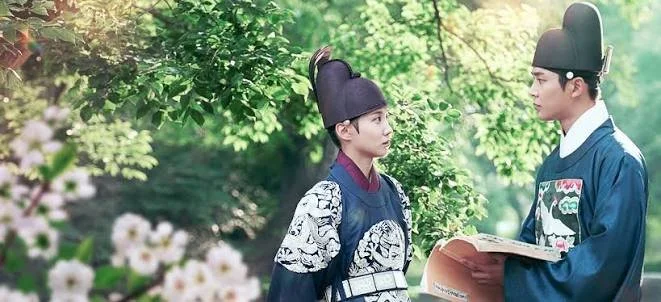
Welcome back to Hallyu Reviews! We hope you enjoyed Connie’s review of Bon Appetit, Your Majesty. If you missed it, be sure to go back and have a read.
This week, we take a look at The King’s Affection.
SPOILERS AHEAD!!
Final Verdict: WATCH
Synopsis
The King’s Affection is a historical drama about the tumultuous life of a king of Joseon who guards a life-or-death secret – she is a woman who rules in place of her murdered twin brother. The series begins with the Crown Princess giving birth to boy/girl twins. Because sharing the womb with a female is considered a weakness and thus a threat to the future king’s rule, the decision is made to kill the female twin, along with all those who know the truth. But in a courageous act, the Crown Princess, assisted by a few fiercely loyal servants, fakes the baby girl’s death and secretly ferrets her away from the palace. The clandestine events of that night remain a buried secret, until the female twin, known as Dami (Choi Myung-Bin), in a twist of fate, becomes a court maid. When the twins serendipitously meet inside the castle walls, the now-Crown Prince, Lee Hwi (also played by Choi), convinces Dami to temporarily swap places with him so that he can escape the palace walls. But when the existence of the Crown Prince’s twin becomes known to political conspirators within the royal court, the Crown Prince, disguised as his twin, is killed in her place. Facing certain death should her true identity ever be revealed, Dami is forced to live as Lee Hwi. As Lee Hwi (Park Eun-Bin), she grows to become a just king, but is continuously tested by both internal and external forces to keep her identity a secret and protect those she loves.
While it is not a MUST WATCH, The King’s Affection is a WATCH.
THE GOOD
(+) Challenges gender norms – A woman in disguise is an oft used Korean trope, but The King’s Affection uses a royal genderbending plot to question centuries of gender norms. The King’s Affection asks the question, what does it mean to be male? And furthermore, is “maleness” an innate quality one is born with or is it a way of being that can be learned over time with practice? Lee Hwi comes to objectively embody a rather convincing masculine persona despite being a female by birth. In a time when female rulers were quite rare in Korea, Lee Hwi’s refined style and physical and emotional resilience allow her to face her enemies and lead her people through many challenging times.
(+) A progressive love story – Though The King’s Affection is a historic K-drama, the love story of Lee Hwi and Jung Ji-Woon (Rowoon), a palace scholar, defies cultural norms of the Joseon Dynasty. Their platonic relationship blossoms into romantic love, in spite of potentially life-threatening consequences. Within the Royal Palace of the Joseon Dynasty, taboo same-sex relationships were treated as illicit misconduct and breaches of strict palace discipline, and even in modern South Korean culture, same-sex relationships remain widely debated. This makes Lee Hwi and Ji Woon’s love story feel shockingly modern and relevant, despite the historic backdrop.
THE BAD
(-) Predictable court politics – Most historical K-dramas are rife with court politics and The King’s Affection is no exception. Life and death struggles for power were very real inside the palace walls, but due to their overuse in K-dramas, the plot did feel a bit predictable.
(-) Slow-paced development – The story in The King’s Affection is quite slow to build momentum. The first few episodes are understandably slow as great care is taken to establish the existence of the twins and to introduce the cast of characters who impact their lives. It did, however, make the K-drama difficult to get through, at times.
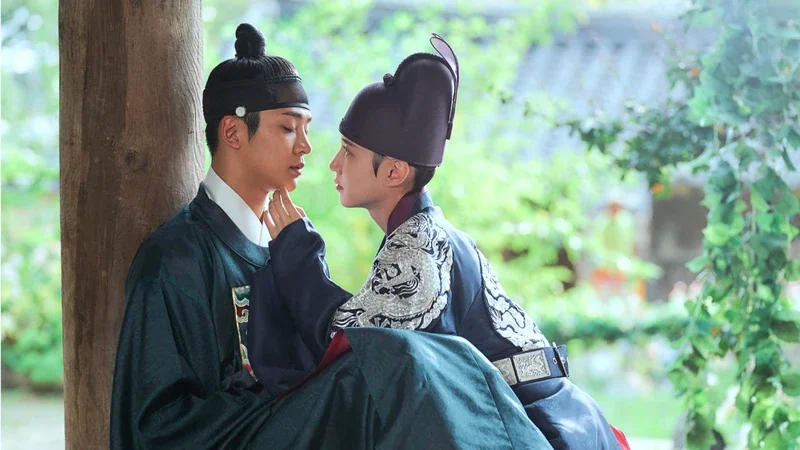
Courtesy of MUBI
So, there it is, our review of The King’s Affection. What did you think of this K-drama? Be sure to leave your thoughts down below!
Up next, Mr. Sunshine.